Lemons to the Rescue

My friend Allison confessed that she was becoming a hoarder. Not in the Crazy Reality TV way–thank goodness. More like in the Fill the Pantry with Good Food way. She had been buying big crates of citrus–Cara Cara oranges, and organic lemons—and making batches of marmalades, limoncello, lemon curd, preserved lemons, and the like. And, she still hadn’t made much of a dent in her purchase. So I was very happy to be the recipient of a bag of these luscious fruits, along with a pretty jar of her Cara Cara marmalade.
There’s nothing to match the power and versatility of the mighty lemon, whose juice and fragrant zest elevate all manner of sweet and savory things. And, as my initial foray into 2012 has been marked with a little slump in the kitchen, a gaze at the cooktop and cutting board with a world-weary eye, I recognized Allison’s kind gift as more than a bag of excess citrus trying find a home. No.
It was lemons to the rescue.
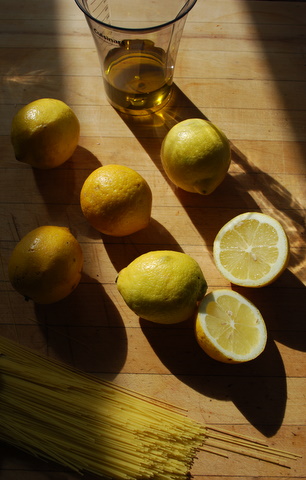
Just seeing them in the welcome sunlight this afternoon was a lift alone.
Lemons for Dinner? You bet.
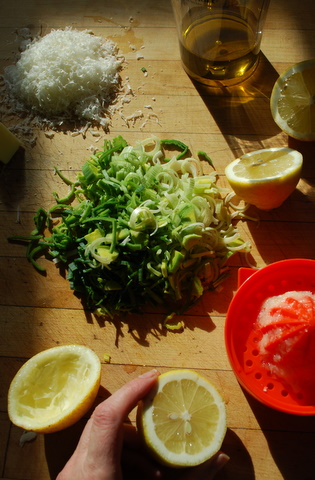
My cousin Cathy and her husband John are both avid cooks. Whenever we get together, we love to share recipes and cook. Last visit, Cathy brought a lemon-based pasta recipe from her collection to prepare. “Capelli d’Angelo Olio e Limone” or Olive Oil and Lemon Angel Hair, from the 1997 cookbook Pastissima! Pasta the Italian Way was simple–deceptively so. There were few ingredients—a sauce comprised of onion cooked in a fair amount of olive oil, mixed with a lot of lemon juice, tossed throughout pasta, and dusted with parmesan.
It took mere minutes to make—and was truly delicious.
The lemons today inspired my to recreate the dish—with a few modifications. Rather than using onion, I substituted a leek. Lemon and leek are terrific together, and the strips of light green tangled throughout the pasta bring welcome color.
Other change-ups include red pepper flakes for bite, over black pepper, and pecorino-romano for pungency, over parmesan.

Without question, this pasta would be a fine foundation for a plank of grilled fish, a tender fillet of trout, even a scatter of lump crabmeat. But solo, it is exceptional, light yet rich, with a pleasant tang. It’s the kind of toss that accentuates the angel hair, rather than masking it with a complex sauce. So use your best here–DeCecco’s Capellini No.9 has been a constant favorite.

This romaine salad is one that I refer to as a “Mock Caesar”—it lacks the depth that anchovies bring to the traditional version, but is just right for the Vegetarian in my household.
Here lemon juice, roasted garlic cloves, and extra virgin olive oil cream up together into a vibrant dressing, generously tossed on chopped romaine leaves mixed with some finely sliced red cabbage.
Again, simple ingredients—simply assembled. It’s more a matter of using your best. Roasting the garlic brings out an inherent sweetness, and the softened cloves act as an emulsifier in the lemon-forward dressing. A crusty piece of ciabatta transforms readily into croutons. Sprinkle some fresh thyme over the cubed bread before toasting for an welcome herbal note.
With this salad and pasta, you can let the lemony sunshine in.

CAPELLINI WITH LEMON, LEEKS, AND OLIVE OIL (adapted from Pastissima! Pasta the Italian Way by Leonardo Castellucci
1 Leek, finely sliced
1/3 cup Olive Oil
Juice of 1 1/2 large Lemons
Sea Salt
Red Pepper Flakes
1/2 cup shedded Pecorino-Romano
6 ounces Capellini (DeCecco is excellent)
Heat olive oil on medium in a skillet or cast-iron pot. Add the leeks, and cook for about 5 minutes, until they become soft. Cook the capellini according to package directions–about 2 minutes in a large pot of salted boiling water. Drain well.
Place pasta in the pot with the leeks and olive oil. Sprinkle with sea salt, red pepper flakes (a couple of pinches) and pour lemon juice over all. Add most of the shredded cheese, reserving some to garnish the top of the pasta after it is served. Toss well, so that the lemon, olive oil, and leeks coat all the strands of pasta.
Serve in warm bowls. Dust with more pecorino. Enjoy!
Makes 2 generous servings.

ROMAINE SALAD WITH ROASTED GARLIC-LEMON DRESSING
1 head Romaine lettuce, washed, dried, and chopped
1 cup Red Cabbage, very finely sliced
2 cups homemade Croutons (cubed from a good crusty loaf, tossed in olive oil, seasoned with salt, black pepper, fresh thyme–toasted in a 300 degree oven for 15 minutes, or until lightly browned)
1 cup shredded Pecorino-Romano
Juice from 1/2 large Lemon
3 Garlic Cloves, oven-roasted
1/2 cup Extra Virgin Olive Oil
Sea Salt
Cracked Black Pepper
immersion blender
In a salad bowl, assemble romaine, red cabbage, croutons and shredded pecorino.
In a measuring cup or small mixing bowl, place lemon juice, roasted garlic cloves, salt and pepper. Using the immersion blender, begin mixing. The garlic will cream into the lemon juice. Add the olive oil slowly, and continue blending. Taste for seasoning.
Pour over salad greens and toss well. Serves 4

Posted in Fruit, Pastas, Recipes, Salads | 28 Comments »
Ricotta Gnocchi, Dressed in Red
Post-holiday drab winter funk settled in my kitchen…with an unsettling inertia. I’ve had as much resistance to picking up a knife and a whisk, as my market shopping bags. It’s been an odd feeling, uncharacteristic of my general passionate-about-food ways, but December left me shopped and cooked out. I’ve tried ignoring it, hoping that the malaise would lift. Now I’ve decided just to chop through it, and play my “use what you’ve got” game.
In my refrigerator, I found a container of ricotta, still in date. Part of a can of whole plum tomatoes in juice. Eggs. A stray scallion. A small wedge of parmegiano-reggiano.
A sealed bag of all purpose flour.
Could dinner lurk in some combination of these?

Indeed it could. Ricotta Gnocchi.
And, those creamy pillow-like dumplings couldn’t be easier to make.
Unlike other versions that use potatoes (also delicious, but have an extra step–cooking the spuds) the dough can be whipped up in a manner of minutes. In their purest form, ricotta gnocchi are simply ricotta-egg-flour. That’s a plain canvas, rife with possibilities. How you want to season them–herbs, bitter greens, nutmeg, other pungent cheese—
or sauce them—smoky beurre blanc with bits of pancetta, chunky pesto, rosy red pepper puree–is up to you.
Or what you’ve got on hand.
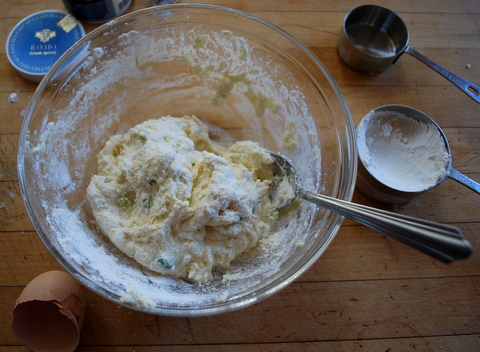
You’ve got plenty of time to make that decision! Mixing the soft dough takes moments. Then, you hand-roll pieces of the dough into long logs, dusting with more flour, and cutting into 1/2″ lengths. Or smaller, if you like.
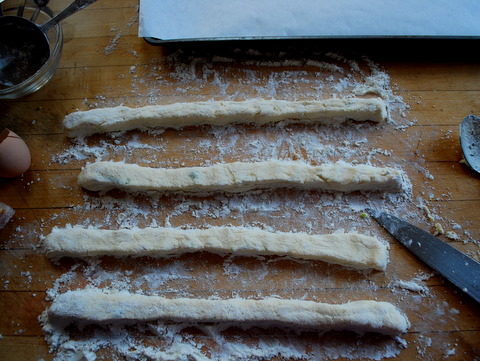
The shapes are imprecise, rustic; the rolling and handling of them feels like child’s play, a delightful aspect to combat any kitchen inertia.
Line them up on a pan lined with parchment and place the pillows into the freezer to get firm. (If you double this recipe, you can keep the unused gnocchi sealed and frozen for up to 6 weeks—ready to use at a given moment.)
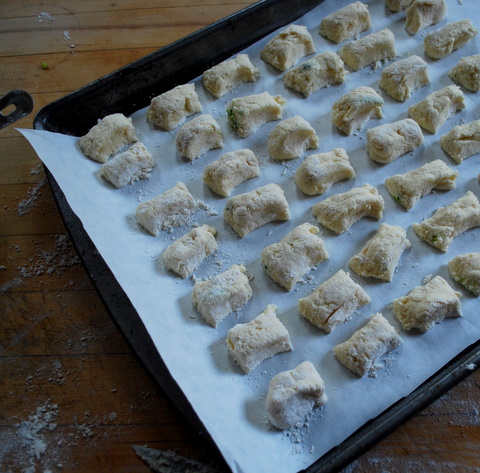
While the gnocchi are tucked into the freezer (or fridge) you can turn your attention to the sauce.
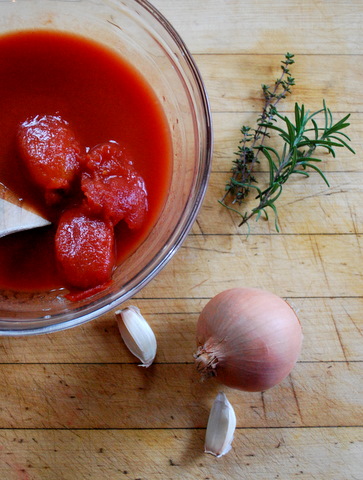
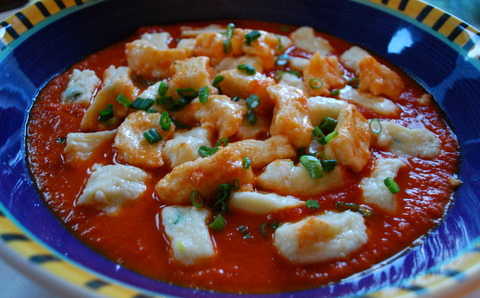
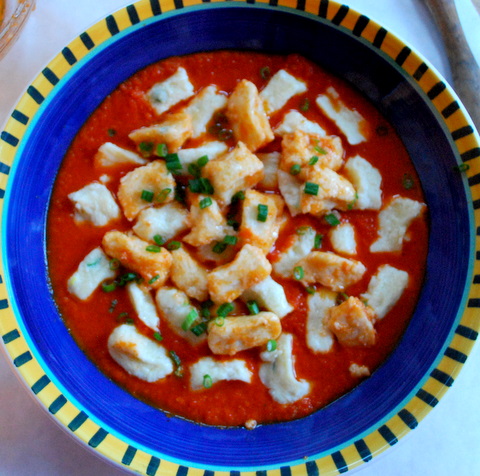
Based on my modest assembly of on-hand ingredients, I chose to cloak mine in a brilliant winter red sauce–little more than plum tomatoes cooked with onion and garlic in olive oil, and pureed. I do like to plunge in a sprig or two of fresh rosemary and thyme, snipped from yard, where they vigorously hang on through the cold weather months. They impart just enough piney aromatics to give the sauce a little herbaceous lift, plucked out before the immersion blender descends into the pot.
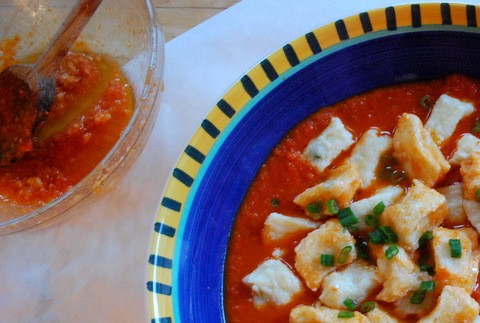
While the sauce simmers, bring a big pot of salted water to boil. Drop the gnocchi in. Very quickly, they’ll rise to the surface–indicating that they are almost done. Let them cook another minute. Remove them with a slotted spoon, and place the tender bites into a pool of red.
The color–a knockout that reminds you of summer—is vibrant and full-flavored dress for the gnocchi, enough to jar the drab winter funk out the door.
RICOTTA GNOCCHI
1 cup whole milk Ricotta
1 Egg
3/4 cup All Purpose Flour (divided)
1/2 c. grated Parmegiano-Reggiano (Pecorino Romano would be terrific, too)
1 Green Onion, sliced thin (optional)
1/2 t. Kosher Salt
fresh ground Black Pepper
Place ricotta, egg, cheese, scallion, and Half of the flour into a bowl. Season with salt and pepper and mix until a soft dough forms. Dust remaining flour on your work counter, and divide dough into 4 pieces. Roll each piece into 1/2″ thick log. Cut into pillow shaped pieces, placing each gnocchi on a parchment-lined baking sheet.
Place the gnocchi in the freezer for about 15 minutes–long enough to set up and be firm.
Bring a pasta pot full of water to a boil. Season with salt. Drop in gnocchi. Cook over medium heat until they float to the surface. Cook for a about one minute more. Remove with a slotted spoon. Gently coat with sauce.
Serves 2 generous, or 4 first course plates
Posted in Egg/Cheese Dishes, Pastas, Recipes, Sauces, Vegetarian Dishes | 36 Comments »
Grits and Grillades
In early November, on one of those rare days when the skies roll out wide and blue and the sun shines with the strength of summer, Maggie and I took a day trip to Falls Mill. Located in Belvidere Tennessee, it’s about a hundred miles from home, and over a hundred years back in time.
There, in the bend of a creek, by a rushing cascade, sits a grist mill built in 1873. Outside, a great water wheel churns, powering a system of belts and pulleys that drive huge cutting stones inside the mill. From inside, emanate the slow, almost groaning sounds of the stones in deliberate rotation, a bass line to the melody of water rippling over rocks, falling in sheets from the mill buckets.
And, inside are bins filled with the results: unbolted yellow and white cornmeal and grits. In an adjacent room, a 19th century press is poised to print a stack of white sacks, soon to be filled with those prized grinds.
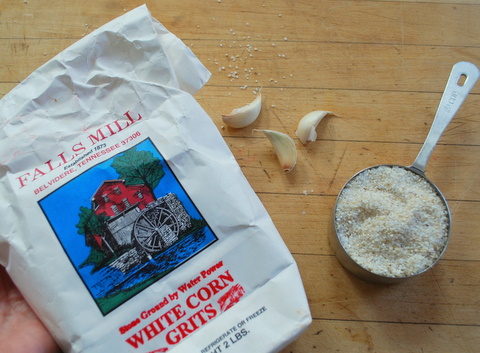
Jane and John Lovett own and operate Falls Mill, and have earned a reputation for their extraordinary milling. Sustainable practices–from the pure water-driven power to the sourcing of local, chemical-free grains, are part of what makes this so. The milling stones themselves hold the key. Unlike commercial steel rollers which smash the grain and adulterate it due to increased friction and heat, these stones slice the grain, leaving more texture, nutrients, and taste intact.
Chefs and cooks across the country who value that difference order from Falls Mill–especially the white corn grits. They are……..grittier! in the best possible way.

I’ve been having a lot of fun working with their products, baking wonderful cornbread and corncakes, buttermilk spoonbread, and rich grits casseroles. The difference in texture and taste is delightfully Huge.
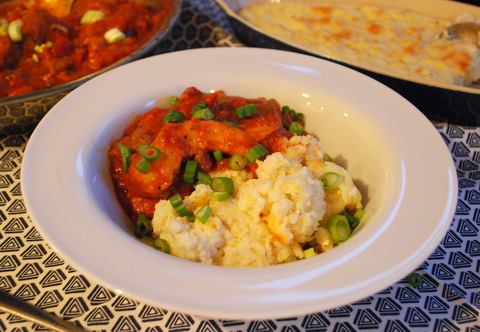
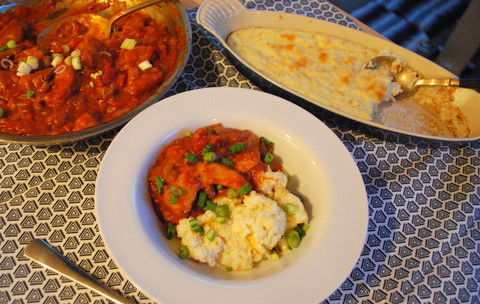
Today I’m sharing a couple of easy recipes that together make a New Orleans-style dish, often enjoyed for brunch, but good anytime.

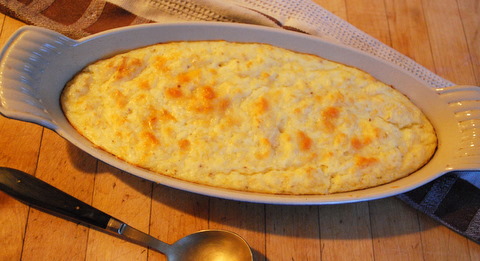
Toasted garlic, brown butter, white cheddar and pinch of cayenne combine with these pearly Falls Mill grits to make a luscious casserole.
And, then, the Grillades: (pronounced Gree-yahds)
The grillades are often made with a cheaper cut of beef, such as round steak—but it is acceptable, by NOLA standards, to use pork. Browned and then braised with tomatoes, spice, and the “Trinity” ( onions, bell peppers, celery) it’s a Creole take on stew: hearty and delicious with the grits.
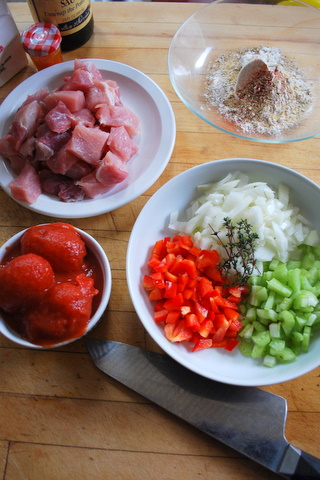
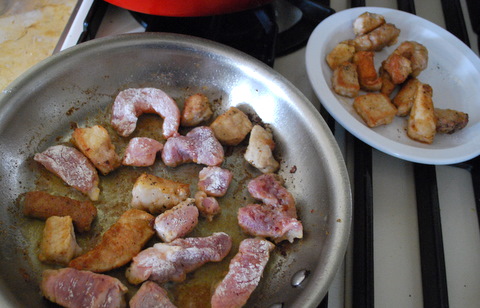
There’s nothing new or surprising about the method. There’s a modest assembly of ingredients. The pieces of meat are pounded, dredged, and browned.
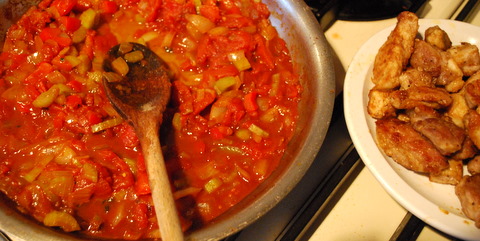
A saute of tomatoes and “The Trinity” form the foundation for the grillades to finish in a long simmer. To add some savory toasted depth, you can make a quick roux, using the leftover seasoned flour. Cook it in a skillet with a little butter and vegetable oil, stirring occasionally, as it acquires a medium brown sheen. Stir in water or broth, and add to the Tomato-Trinity saute.
Grillades, like stews, improve with time.
These fabulous grits, though, are creamy perfection, right out of the oven.

TOASTED GARLIC GRITS
2-3 cloves fresh Garlic, minced
1 1/2 T. Butter
2 cups Water
1/2 t. Salt
1/4 t. Black Pepper
dash or two Cayenne
1/2 cup Stone Ground Grits
1 Egg
1/4 c. Half and Half
1/2 c. shredded White Cheddar
Melt butter in a 2 qt. saucepan on medium heat and sauté minced garlic until it becomes toasty golden brown. Add water. Stir in grits. Season with salt, pepper, and cayenne. Simmer for about 20 minutes—grits will become creamy. Remove from heat. Stir in half of the shredded white cheddar.
Beat egg with half-and-half. Beat mixture into cooked—and slightly cooled grits. Pour into a buttered casserole dish. Dust with remaining shredded cheddar.
Bake in a preheated 350 degree oven until puffed and golden, about 25 minutes.
Serves 3-4

PORK GRILLADES
1 lb. boneless Pork, cut into chunks, trimmed, pounded (the “grillades”)
Seasoned Flour Mixture: 1/3 c. All Purpose Flour, 1/2 t. Salt, 1/2 t. Black Pepper, pinch Cayenne, 1/4 t. Paprika, 1/4 t. Granulated Garlic
2 T. Vegetable Oil
1 T. Butter
1/2 c. each Diced Onion, Sweet Red Bell Pepper, Celery (aka “The Cajun Trinity”)
1 t. Fresh Thyme
1 can Tomatoes (whole or diced) and Juice
1 1/2 t. Worcestershire Sauce
1 t. Louisiana Hot Sauce
1-2 T. Quick Roux
1/2 c. Water or Broth (chicken or vegetable)
Dredge the grillades in the seasoned flour and shake off excess. Reserve unused flour mixture to make quick roux.
In a skillet, heat the vegetable oil over medium heat. Brown the grillades well on both sides, a few at a time. Transfer the grillades to a plate. When finished, melt butter over medium heat in the same skillet, scraping any browned bits from the meat. Add the Onions, Bell Pepper, Celery, and Garlic and cook until the vegetables are soft. Stir in Worcestershire, Tomatoes and their juice, fresh thyme.
Make quick roux:
In a separate skillet, melt 1 T. Butter with 1 T. vegetable oil. Add the remaining seasoned flour mixture and stir well, dissolving the flour. On low heat, cook the flour mixture until it becomes toasty brown. Add water or broth and stir well, until thickened. Pour into the other skillet, and fold into the tomato-vegetable meld.
Return the grillades to the skillet. Cover and simmer for 1 hour or until tender. Taste for seasoning, and add a few dashes of Louisiana Hot Sauce to deepen the mild heat.
Serves 3-4
Posted in Casseroles, Egg/Cheese Dishes, Meats/Poultry, Recipes, Rice/Other Grains/Legumes | 31 Comments »
 AVAILABLE AT THESE ONLINE RETAILERS
Amazon,
Barnes and Noble,
Books-A-Million, and wherever books are sold
AVAILABLE AT THESE ONLINE RETAILERS
Amazon,
Barnes and Noble,
Books-A-Million, and wherever books are sold




- Shrimp-Sweet Pea-Rice Croquettes
- One-Hour Cheese! review, recipes, and a giveaway
- Saltimbocca, sort of
- Ebinger’s Legendary Blackout Cake
- Asparagus Times Two
- Lemon Lemon Lemon Chicken
- Spring Supper: Fennel braised Pork, Beets-and-Blue Salad
- Fresh Starts: Sourdough and Spring
- Indonesian Bami Goreng and a giveaway
- Gastrique Mystique


Cooking programs for youth and teens.

- Feed a Child, Nourish a Mind
A Perfect Apple Tart, and a Peek into Luisa Weiss's Berlin Kitchen
A Place at the Table
Good Things to Come
Home Remedy
Interlude: Urban and Rural Delights
Lamb with Spinach, and The Honey Thief
Lemonade and the Literature of Food
Pura Vida
Ricotta-Making, Spiced Peach Salad and a Review
The Game of 7
Three Gratitudes
Welcome Volunteer